Commercial interiors place demanding requirements on decorative panels. Hotels, retail stores, restaurants, offices, and residential developments may need materials that withstand regular cleaning, humid conditions, daily impact, and project-specific fire-safety requirements.
Choosing a panel based on a single label such as “water-resistant” or “fire-retardant” is not enough. Buyers and project specifiers should examine the test classification, substrate construction, product grade, installation method, and supporting documentation together.
Understand the Difference Between Fire and Moisture Performance
Fire performance and moisture resistance are separate properties. A panel may perform well in humid conditions without having the fire classification required for a particular building application. Likewise, a fire-rated material is not automatically suitable for wet areas.
For commercial projects, the specification should define both requirements independently:
Fire classification required by the building code or project consultant
Moisture exposure expected during normal operation
Whether the panel will be installed near sinks, kitchens, bathrooms, or cleaning areas
Whether the substrate edges and joints will be exposed
Whether the panel forms part of a tested wall or floor assembly
The final selection should be based on the complete assembly where applicable, not simply the performance label of an individual board.
Compare Panel Construction Before Comparing Performance Claims
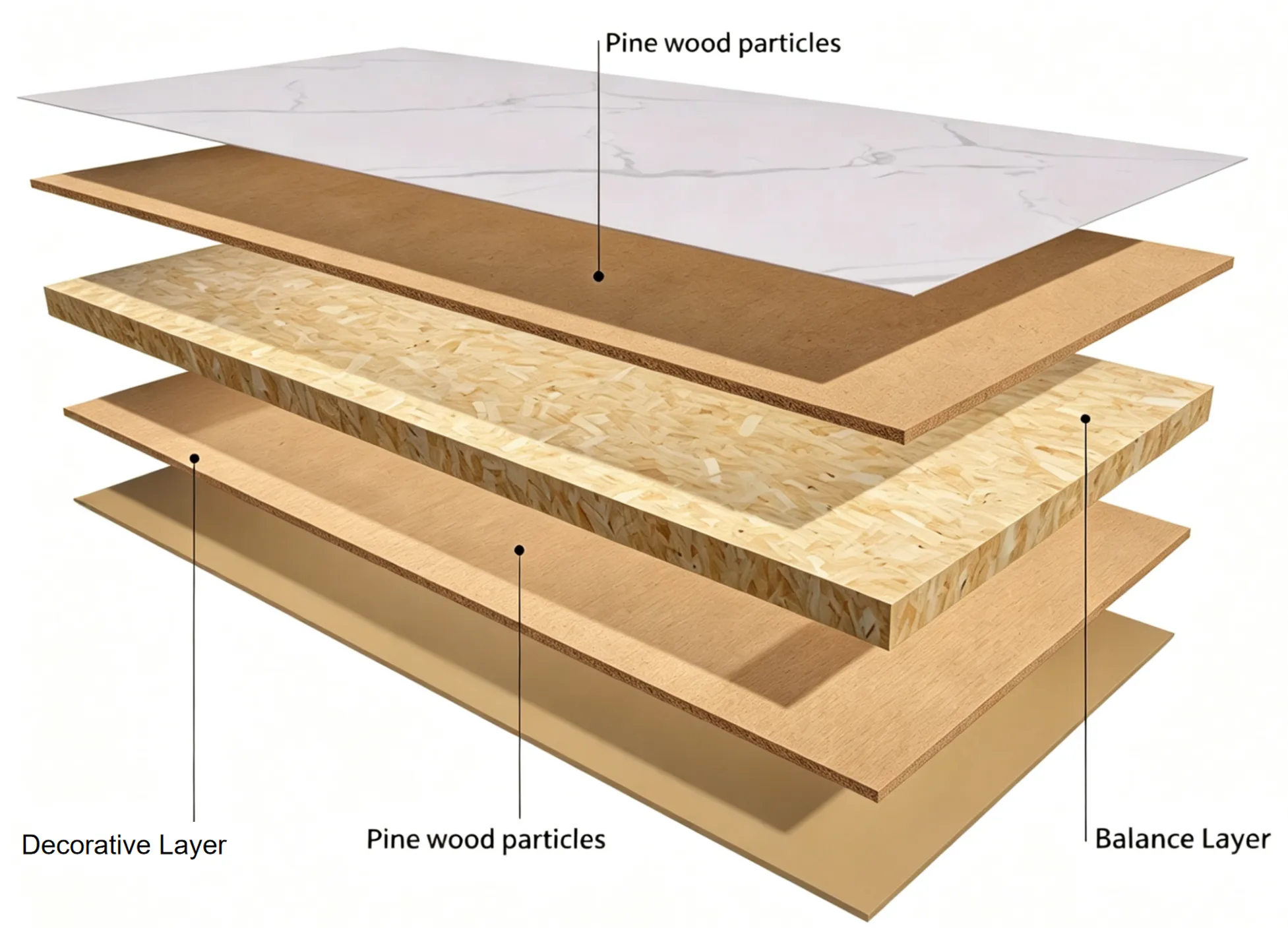
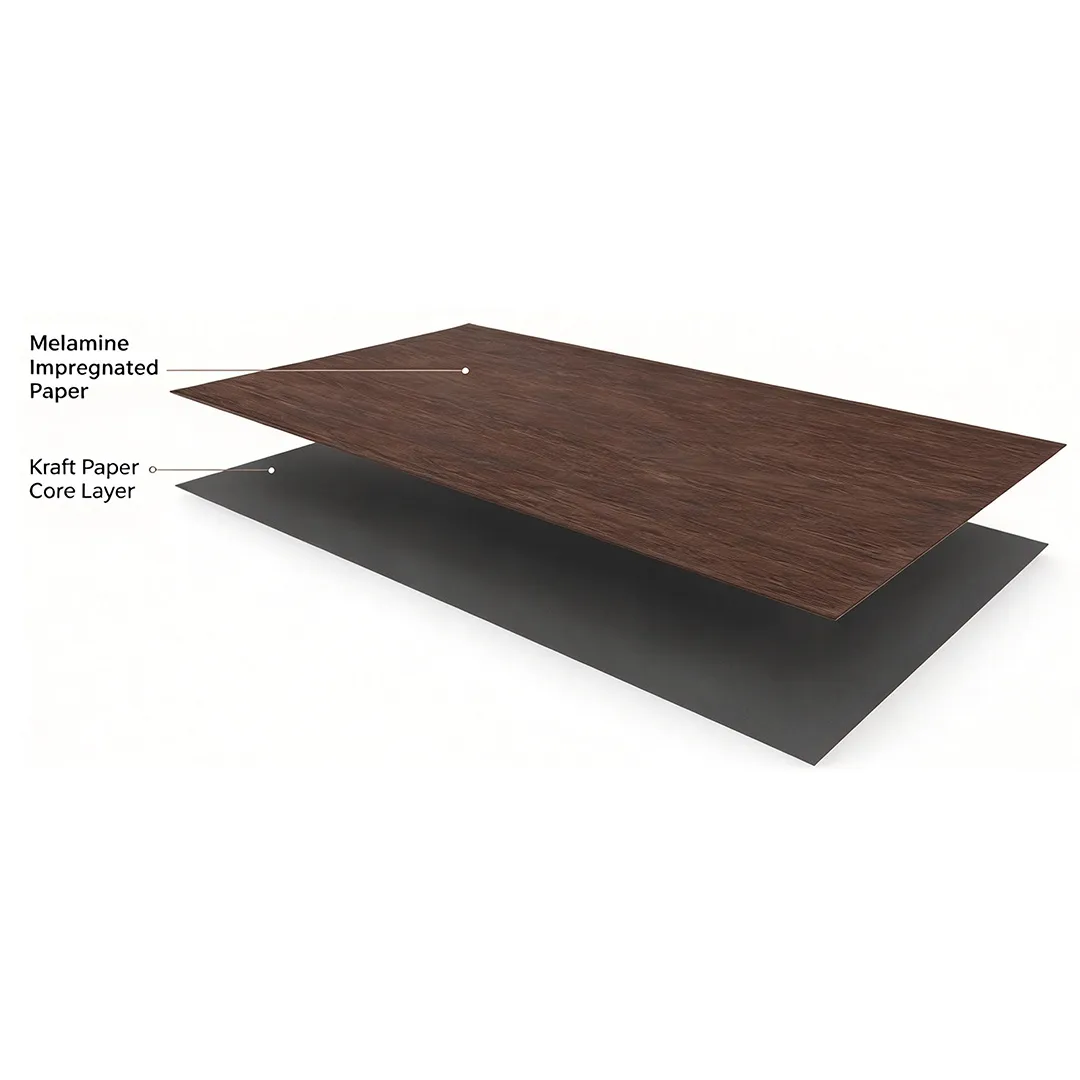
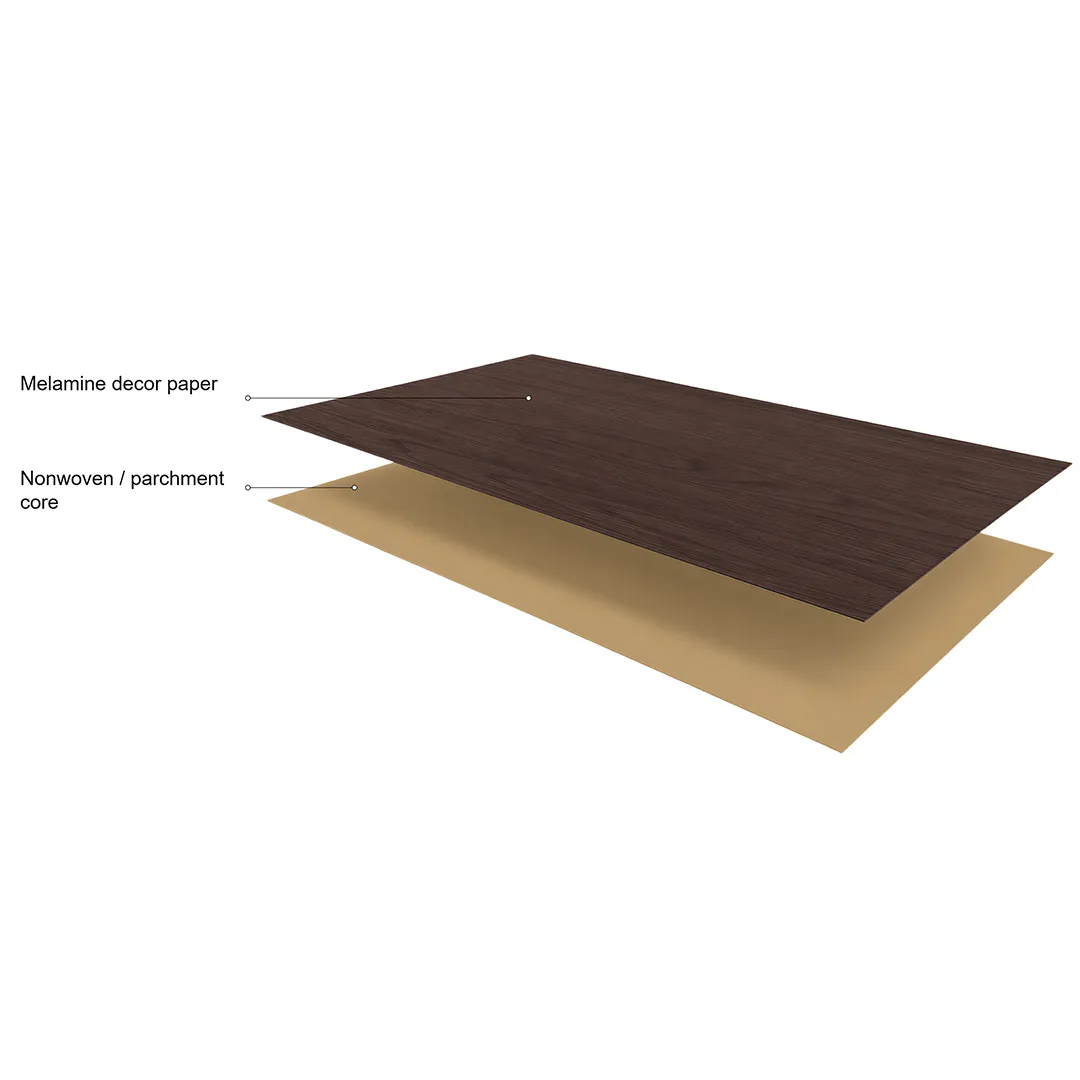
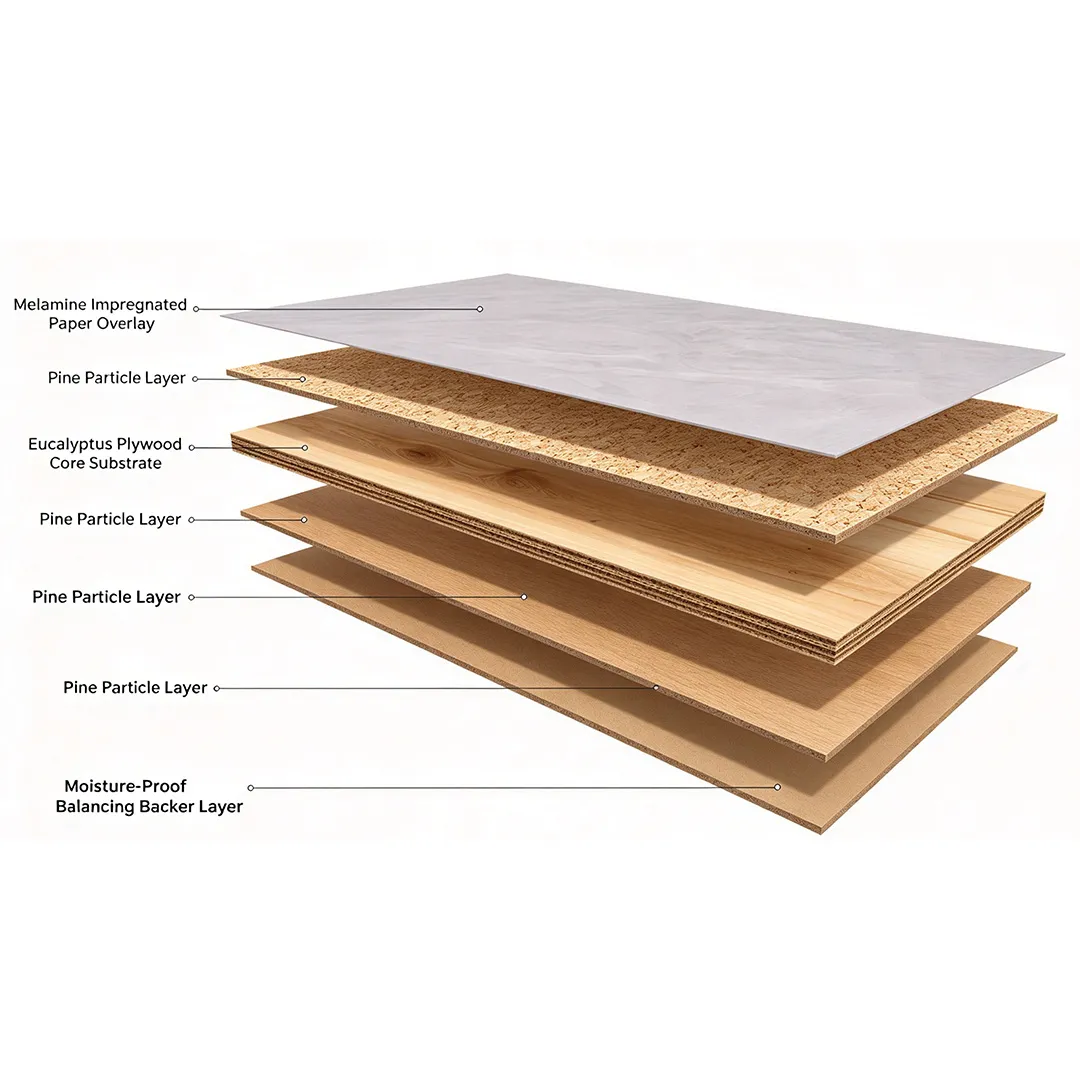
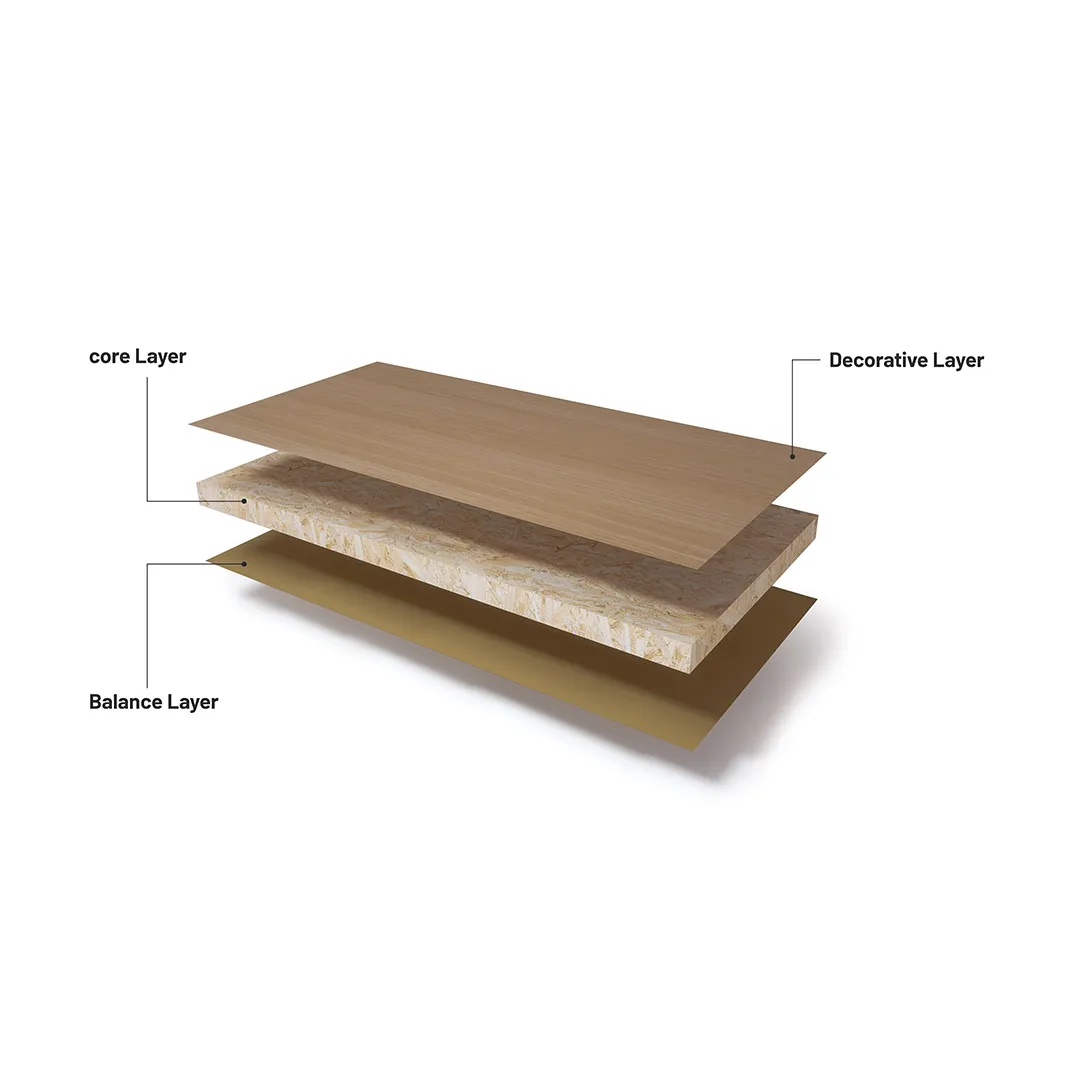
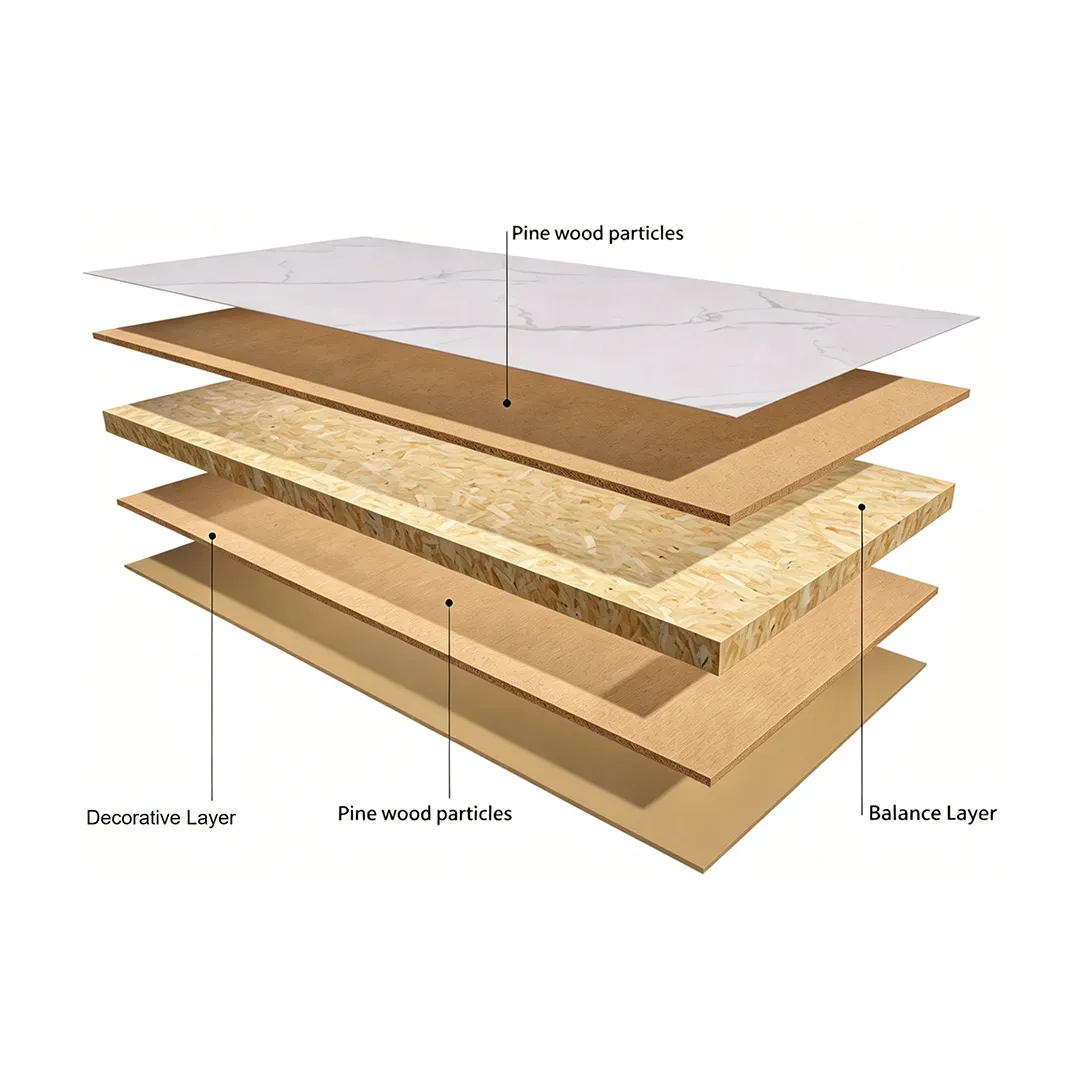
Decorative panels may use fiberboard, hollow-core composite structures, inorganic boards, or other engineered substrates. Their construction affects weight, installation, moisture behavior, and finishing options.
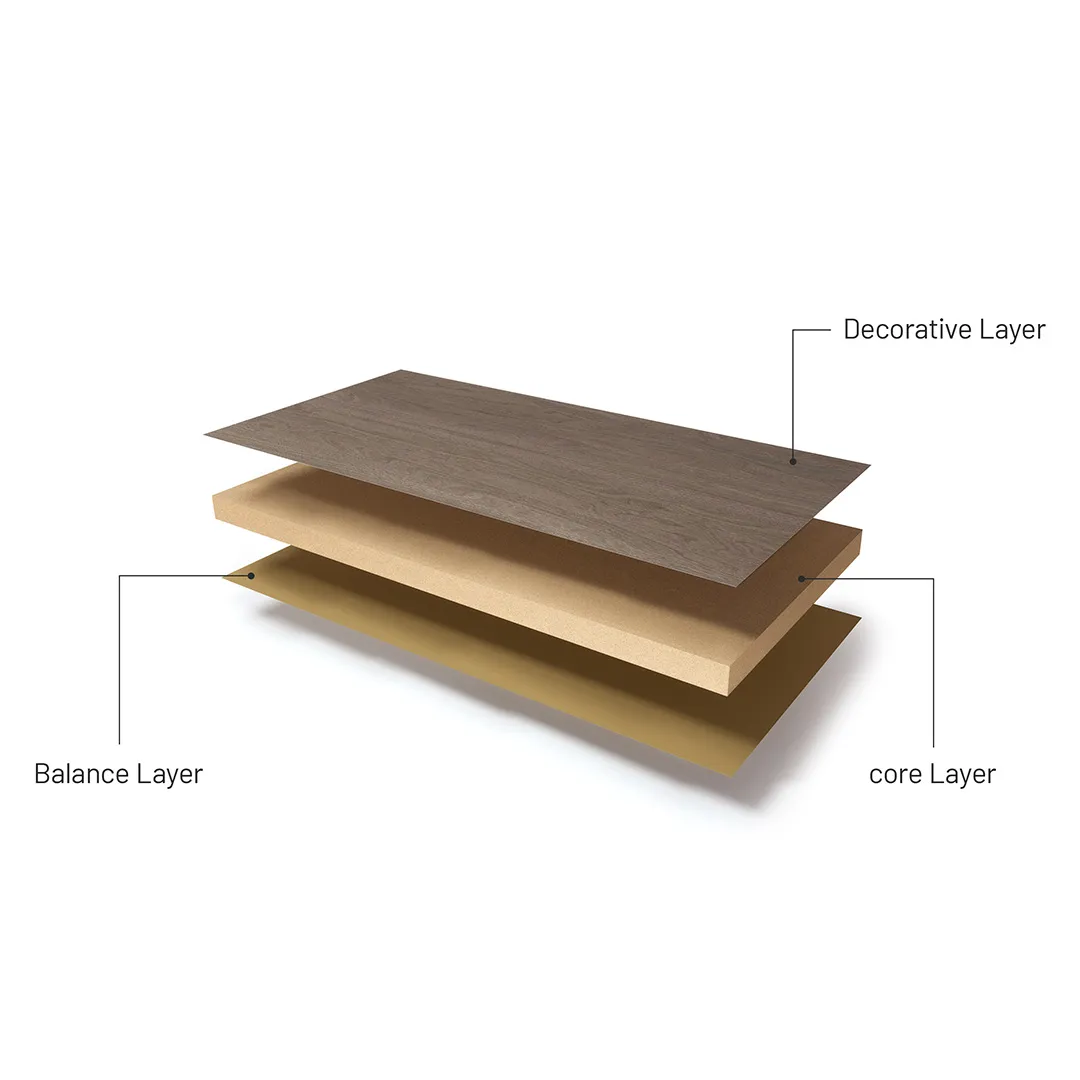
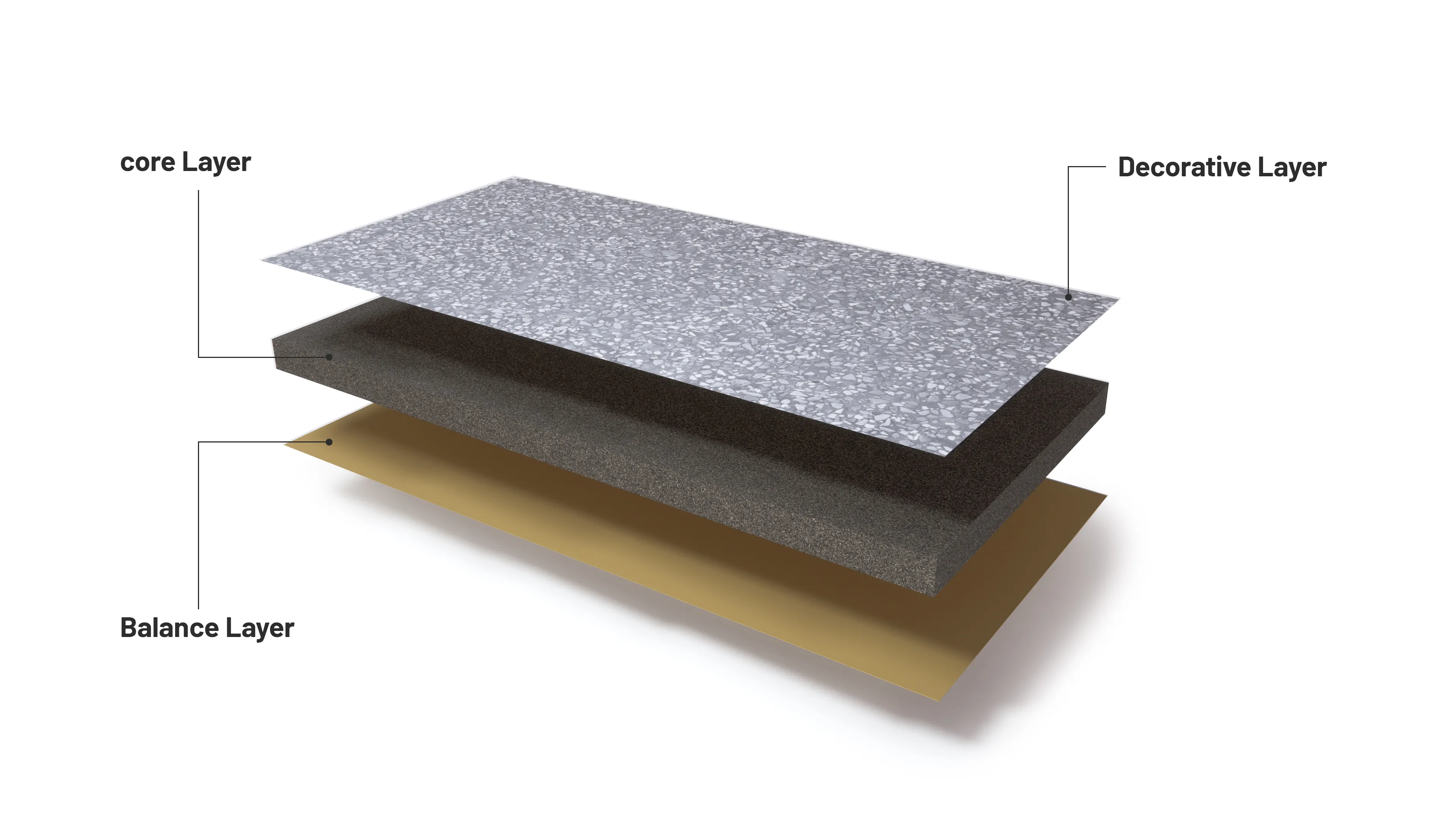
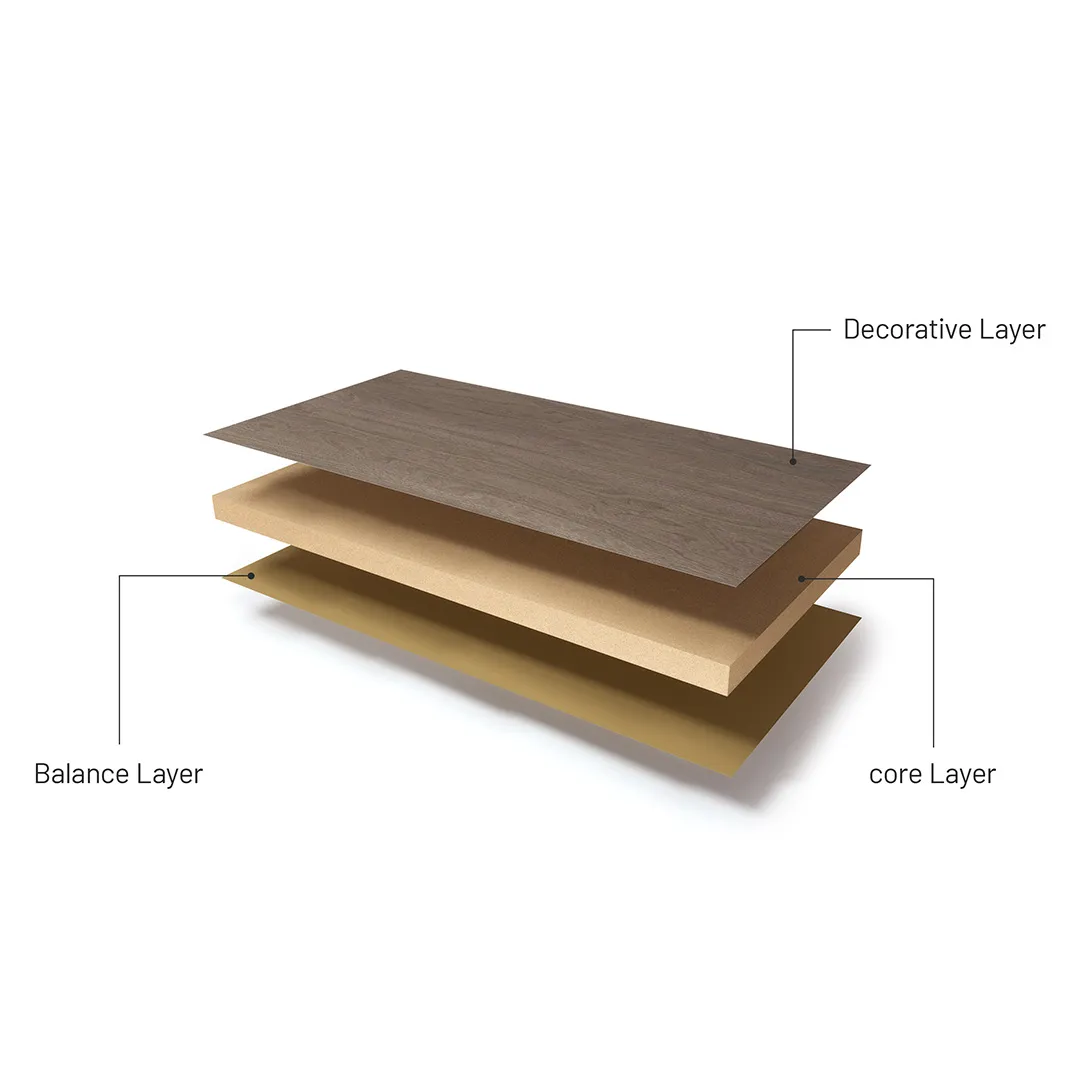
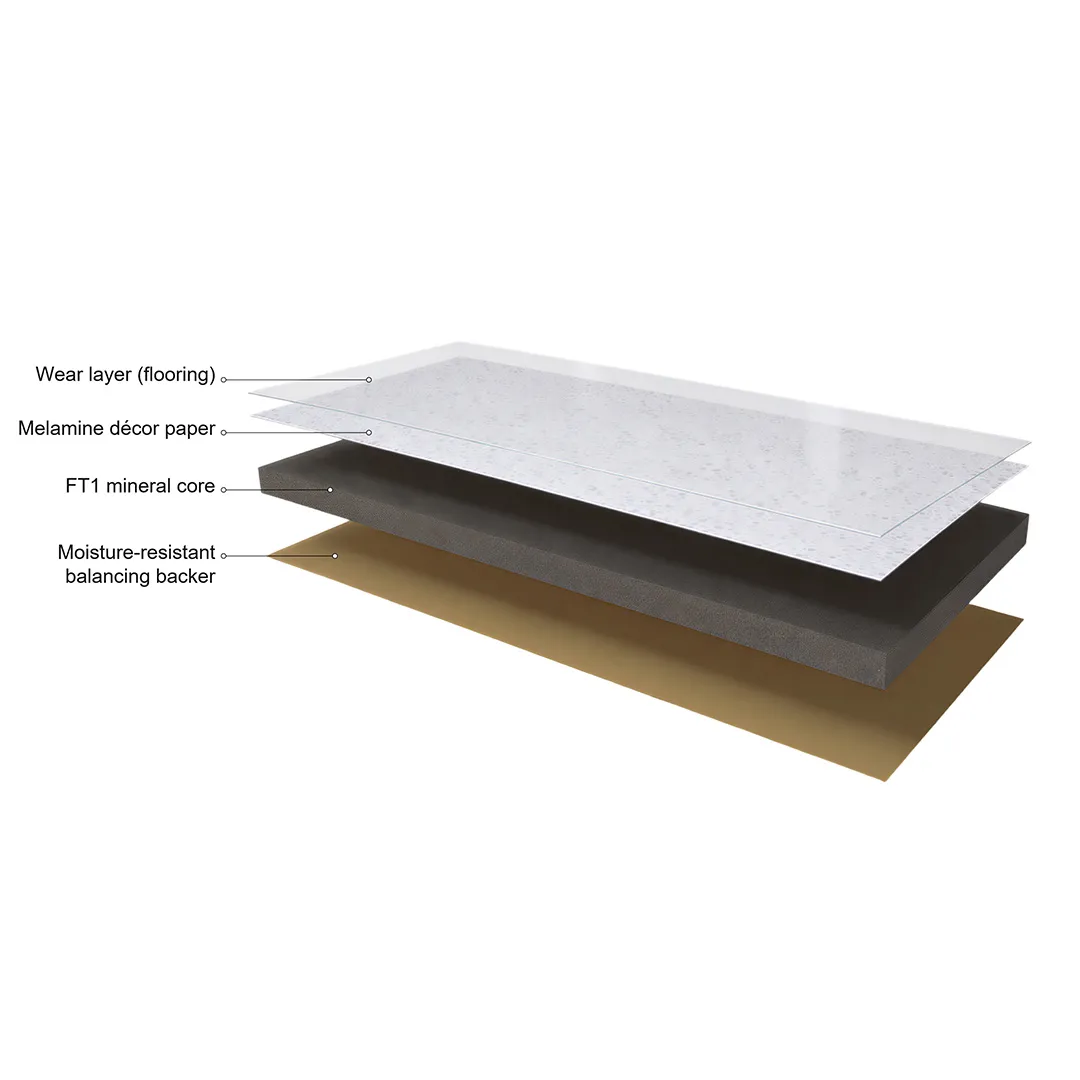
For example, the wood fiber panel product information describes a high-density fiberboard core, a decorative paper facing, and a moisture-resistant balancing backer. It is positioned for general commercial spaces with cost-sensitive requirements.
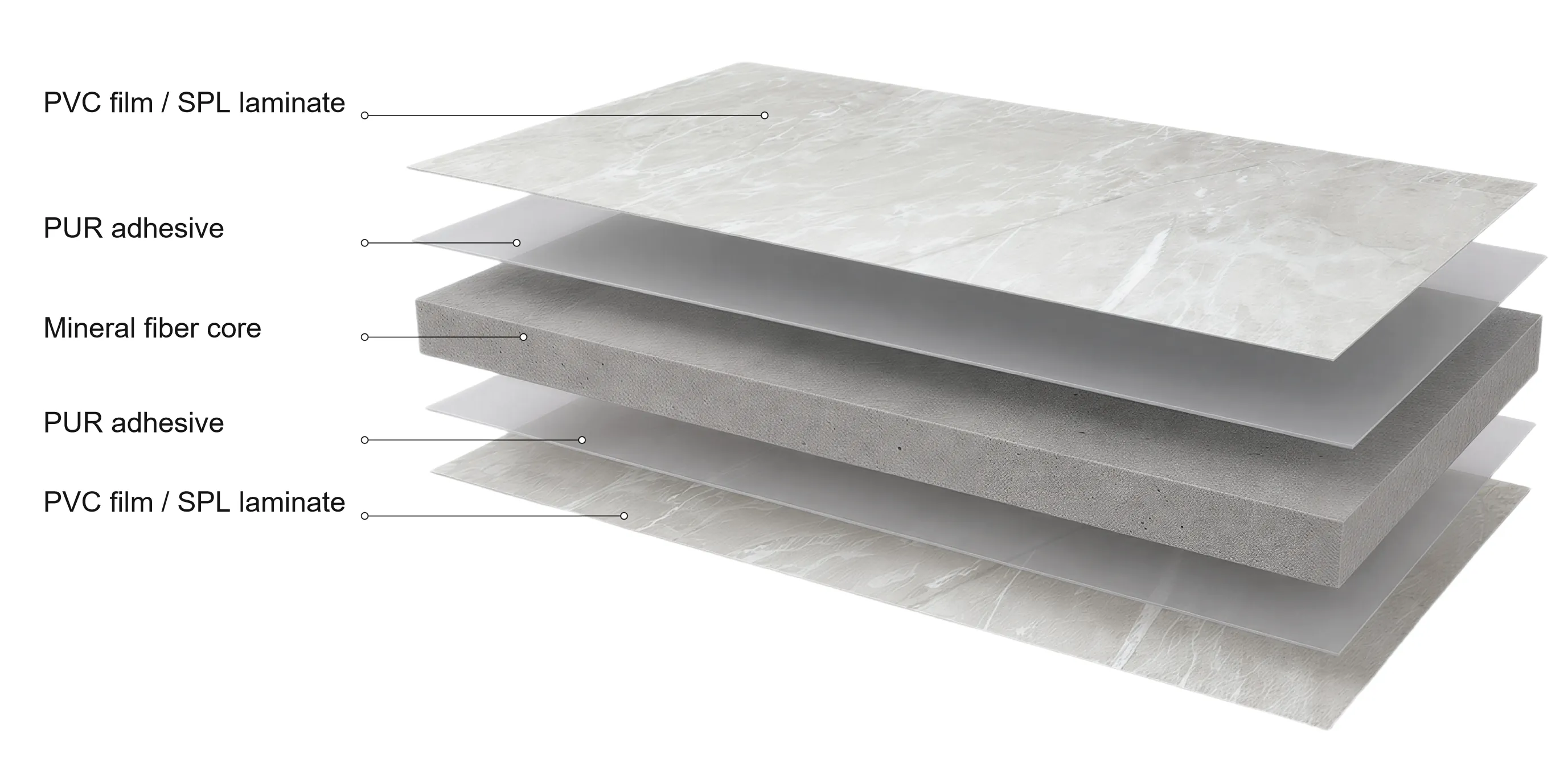
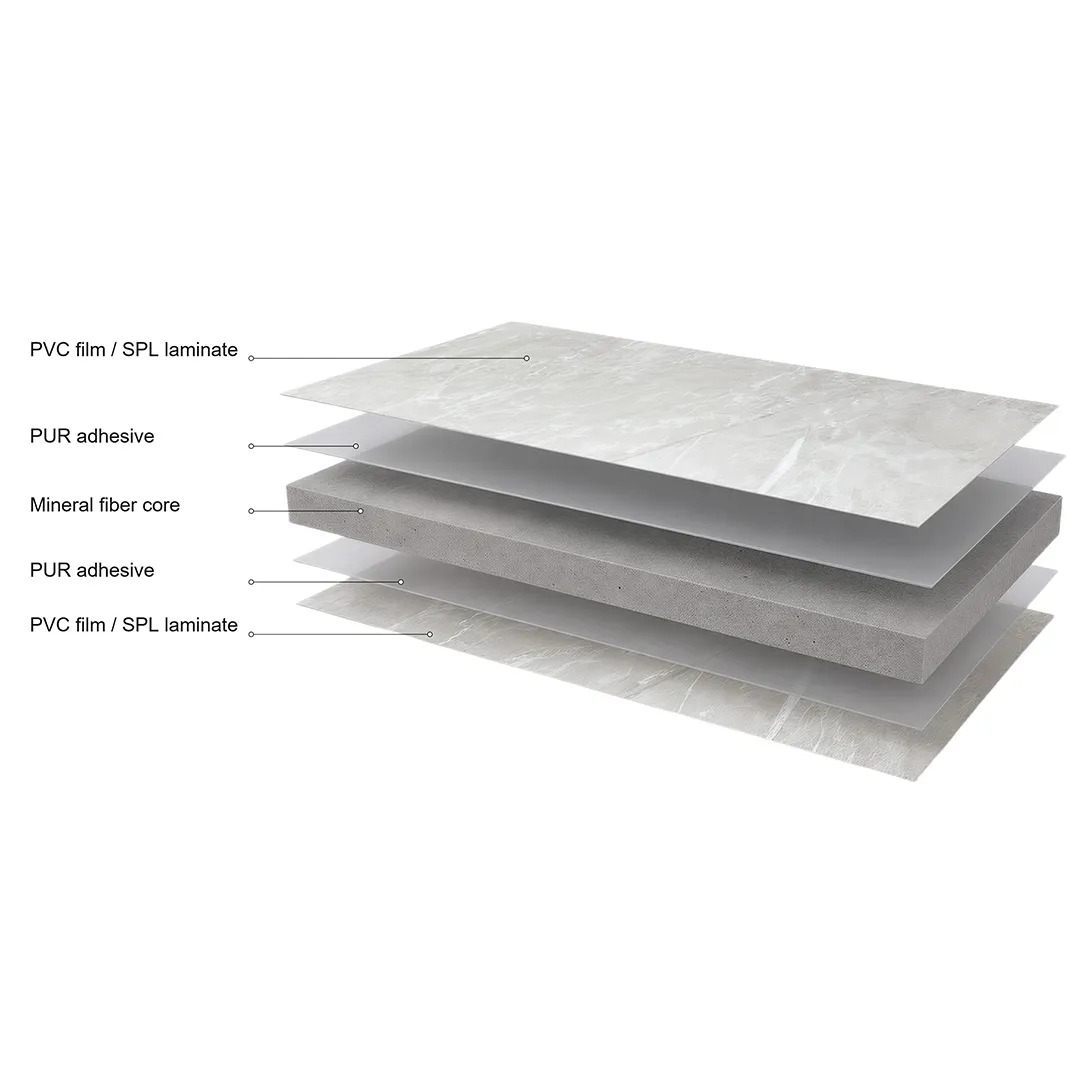
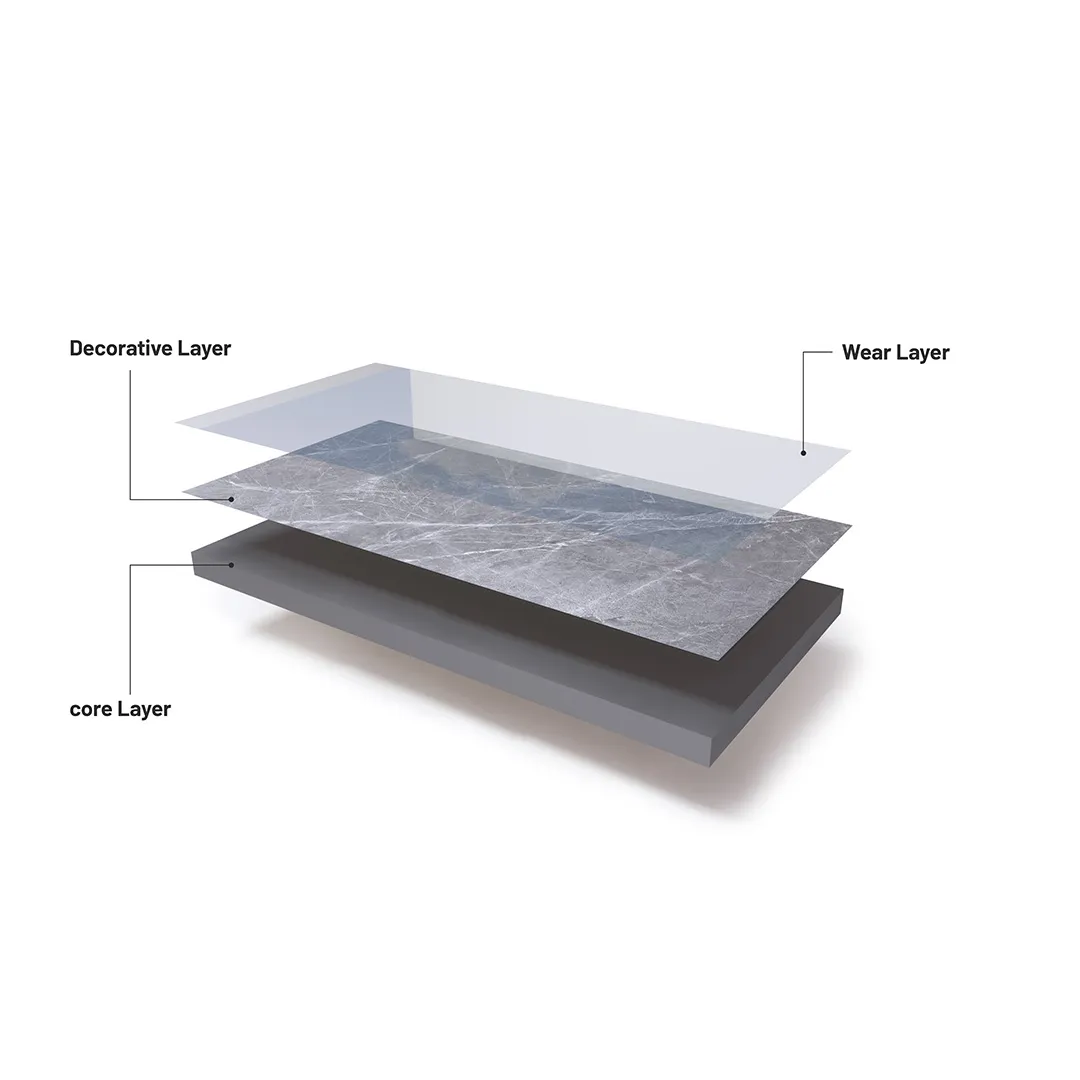
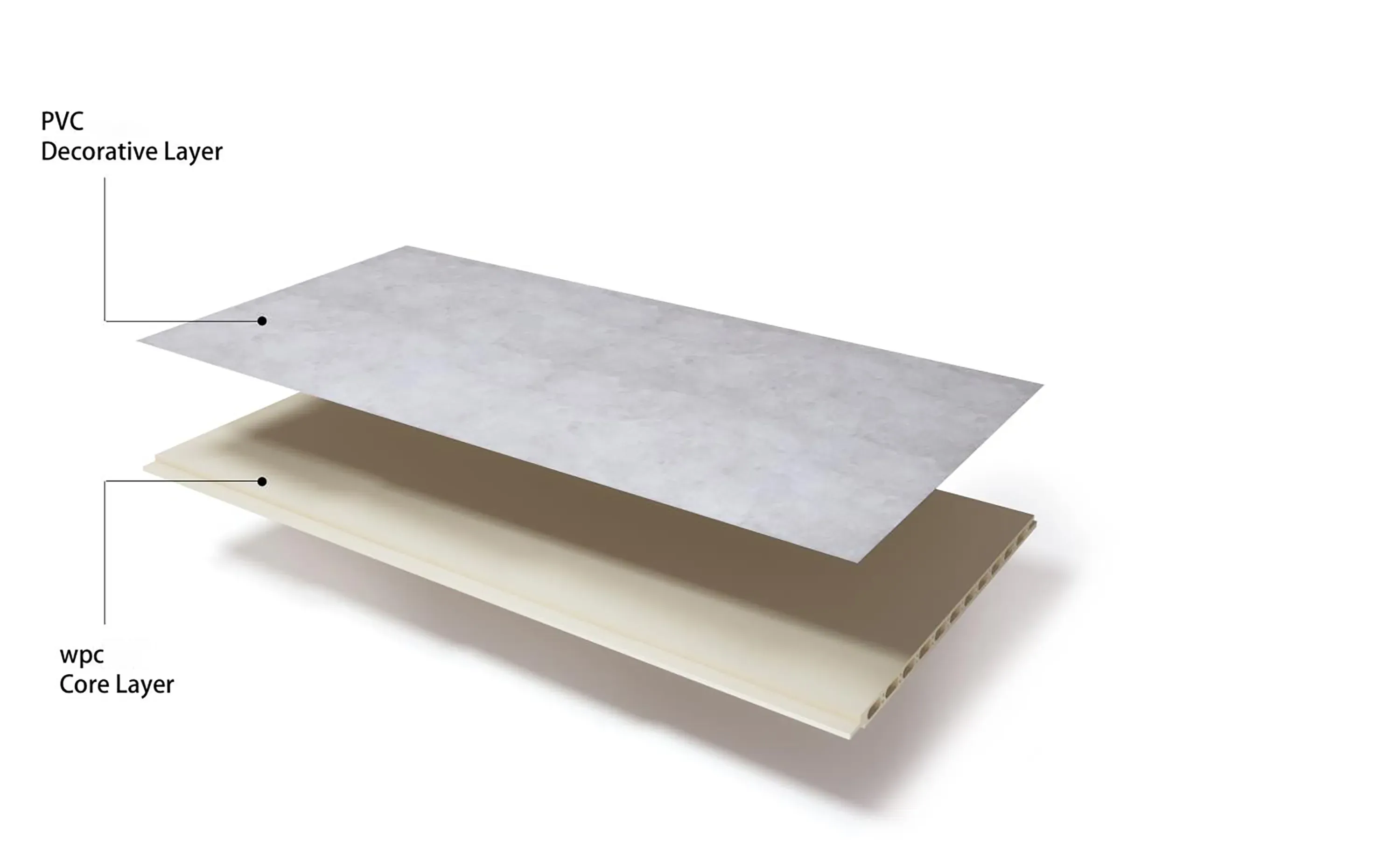
A different construction is used in the SW WPC hollow-core panel. The product page describes a WPC hollow core, a PVC decorative layer, and German-imported PUR adhesive. Its stated applications include hotel projects, apartments, and retail stores where fast installation and moisture resistance are important.
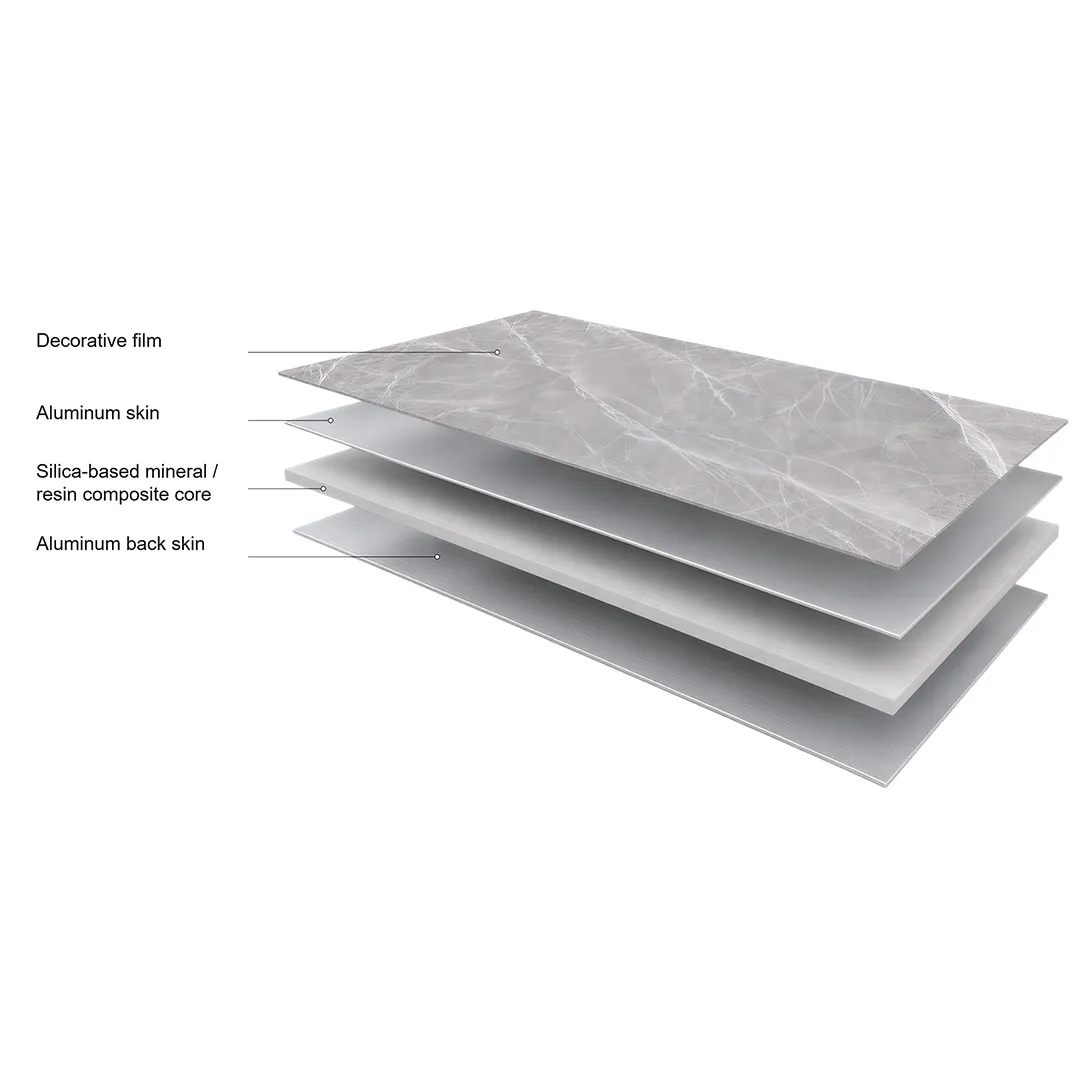
MgO boards use an inorganic substrate construction and are positioned for projects with demanding moisture and fire-performance requirements. However, the exact product grade must be confirmed before a specification is approved.
Evaluate Moisture Resistance Using Published Test Values
Water-related performance should be evaluated using the actual test value, the test duration, and the product's intended application. A 24-hour water absorption swelling rate is a useful specification point for comparing certain board products, but it does not mean the panel can remain submerged or exposed to standing water indefinitely.
The following comparison summarizes values published on the relevant LANSEN product pages.
| Product | Published water absorption / swelling | Formaldehyde class | Published thickness |
|---|
| MX Wood Fiber Panel | 24-hour swelling ≤13% | E1 | Furniture: 5–25 mm; walls: 8/12 mm; floors: 12 mm |
| SW WPC Hollow-Core Panel | Water absorption ≤2% | E0 | 8 mm |
| MgO Board | Specification table: ≤2%; selected grades: ≤1% | E0 or higher | 8/12 mm |
The values above are taken from the website's product information. The test descriptions are not identical across all products, so buyers should not treat the figures as a direct substitute for a project-specific test comparison.
Select the Right Panel for High-Humidity Environments
Bathrooms, kitchens, hotel service areas, and other high-humidity environments require careful material selection. The substrate, decorative layer, joints, edges, and fixing system all contribute to the performance of the finished installation.
For projects that require a water resistant wall material, the SW WPC hollow-core panel is one option to evaluate. The published product information lists a water absorption value of ≤2%, an E0 formaldehyde class, and a finished thickness of 8 mm. It also describes PVC or PP wrapping finishes and an extrusion-molded hollow-core structure.
These characteristics may be relevant to hotel renovations, apartments, and retail projects with tight installation schedules. However, buyers should still confirm the intended exposure conditions, joint treatment, and installation details. A low water-absorption value does not remove the need for appropriate sealing and construction detailing.
Review Fire Classification by Product Grade
Fire classification must be verified for the exact product and grade being purchased. Different grades within a product family may have different classifications, and a general product description may not contain enough information for regulatory approval.
The LANSEN MgO Board page describes a B1 fire-retardant rating in its introduction. Its specification table also lists B1 and indicates that certain grades may reach A2. This means the buyer should identify the required grade and obtain the corresponding supporting test documentation rather than assuming that every version has the highest classification.
The phrase fire proof surface is sometimes used broadly in product searches, but it should not replace a recognized fire classification in a technical specification. No decorative panel should be described as completely fireproof without evidence supporting that claim.
For the same reason, confirm whether the required classification applies to the board itself, the decorative surface, or a complete wall or floor assembly. These are not necessarily equivalent.
Consider Installation, Joints, and Maintenance
Even a panel with favorable laboratory properties can underperform if it is installed incorrectly. Moisture may enter through unsealed edges, poorly designed joints, penetrations, or damaged surface layers. Fire performance may also depend on the complete assembly, including framing, insulation, fixings, and joint treatment.
Before installation, project teams should confirm:
Whether the substrate requires acclimatization
Which adhesive and mechanical fixing methods are approved
How panel edges and joints should be treated
Whether expansion gaps are required
Which cleaning products are compatible with the finish
Whether the installation must follow a tested assembly detail
Maintenance instructions should be included in the handover documentation. Routine cleaning should not introduce chemicals or excessive water exposure that may damage the decorative layer or substrate.
Prepare a Performance-Based Procurement Checklist
A reliable purchasing process should begin with a written performance schedule. It should identify the product name, substrate type, grade, thickness, size, decorative finish, fire classification, moisture-related test value, emissions class, and intended application.
Ask the manufacturer for current technical data sheets and supporting test reports. If a website introduction and specification table show different values, request written clarification before placing the order. This is particularly important when the project consultant requires a specific fire classification or maximum water absorption value.
Samples should also be evaluated under the project's actual design conditions. Check surface appearance, edge quality, joint alignment, cleaning compatibility, and installation feasibility. Where required, arrange independent testing or obtain project consultant approval before mass procurement.
Frequently Asked Questions
1. Does a water absorption value of 2% mean a panel is waterproof?
Not automatically. It is a published test value under a defined method or condition. Long-term water exposure, installation details, edge sealing, and joint design must also be considered.
2. Is an E0 formaldehyde classification the same as a fire rating?
No. Formaldehyde classification relates to emissions, while fire classification relates to reaction to fire or another defined fire-performance test. They measure different properties.
3. Can a decorative WPC panel be used in a hotel bathroom?
It may be considered for suitable applications, but the project team must verify the product's approved use, installation details, joint treatment, and exposure conditions. Do not assume that every WPC panel is suitable for direct or continuous water exposure.
4. Why should buyers confirm the exact MgO Board grade?
The published MgO Board information includes grade-dependent performance values. The specification table identifies B1 and notes that certain grades may reach A2; it also gives different swelling values for selected grades. The purchased grade must match the project's approved requirements.
5. What should be checked before approving a fire-rated decorative panel?
Confirm the exact product and grade, the applicable test standard, the classification shown on the report, the report's validity and scope, and whether the classification applies to the board or the complete installed assembly.